Hand Print Thank You Cards: 15-Minute Toddler Activity

By Katie · Mom of 2 under 3. Founder, Screen Free Toddlers.
· 8 min read · @screenfree_toddlers
A 15-minute hand print thank you card activity for toddlers ages 2 to 4. Setup, why it works, age tweaks, and what to do when paint gets everywhere.
Time: 10-15 minutes | Age: 2-4 years | Setup: 1-2 minutes | Mess Level: High
It was the third week of January and we still had four unwritten thank-you notes sitting on the counter. My daughter had gotten a puzzle from her aunt, a stuffed bunny from her grandparents, and a stack of books from a cousin. The notes were going to sit there forever if I did not figure out a way to involve her.
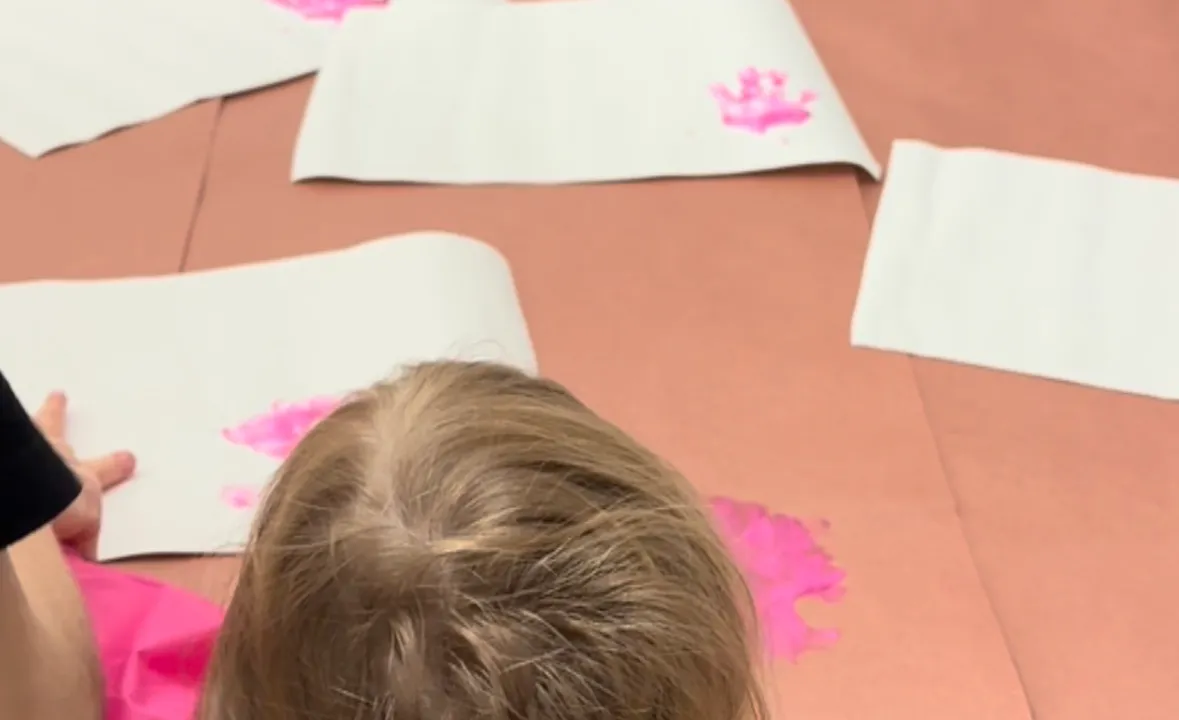
Hand print thank you cards are exactly what they sound like. Tape some paper down, get washable paint on her hands, and let her stamp a print onto white card stock. I write the message around or under the print. Two-year-olds cannot write thank-you cards. They can put their hands on them, and that turns out to be enough.
Here is the setup, why I am not waiting until she can hold a pen to start the gratitude habit, and what to do when the paint ends up on the cabinet doors.
Why Hand Print Thank You Cards Work for Toddlers
Toddlers between 18 months and 4 years are in a sensitive period for what developmental researchers call cause-and-effect learning. Every time she presses her painted hand onto paper and a print appears, her brain is reinforcing the link between her own action and a visible result. According to the CDC’s developmental milestones for 2-year-olds, this kind of self-directed problem-solving with materials is exactly what they should be doing at this age.
The activity also stretches a few skills at once. The hand has to land flat for the print to come out, which is a surprising amount of motor planning. She has to figure out how much pressure to use, then decide where on the page to put it. By the third or fourth print, most kids start arranging them deliberately instead of slapping randomly.
There is a softer layer too. Gratitude is learned, not instinctive, and the earliest exposure happens through ritual. My toddler does not understand what “thank you” means to my aunt in Ohio. But she understands that we are making something for someone she knows, and that something is going to leave our house and end up at their house. That is the seed.
What You Need
- Butcher paper or craft paper, big enough to cover your work surface. A drop cloth or cut-open paper grocery bags work too. Skip newspaper. The ink transfers and you will end up with stains on the cards.
- Masking tape or painter’s tape. Tape the paper down on all four sides. A toddler will yank loose paper, and the paint moves with it.
- Washable kids’ paint, two or three colors. Crayola washable tempera is the workhorse. Avoid anything labeled “acrylic” or “craft paint” if you care about your floors.
- Plain white card stock or blank thank-you cards. Plain index cards work in a pinch.
Total cost: under $15 if you are starting from scratch, $0 if you already have the basics.
How to Set Up Hand Print Thank You Cards
- Tape butcher paper over your entire work surface, including a generous border that hangs over the table edges.
- Set out the blank cards in a row so each one is within your toddler’s reach.
- Squeeze one or two colors of paint onto small plates or directly onto the butcher paper. Keep the amounts small.
- Roll up your toddler’s sleeves and have her hold her hands flat, palms up.
- Either dip her palm in the paint or paint her palm with a brush. Brushing on is less messy.
- Guide her hand to the card and press it down flat for about two seconds. Lift straight up.
- Repeat on the next card. Add a second color if you want layered prints.
If a full hand print is too much for a younger toddler, try fingerprints. A row of fingertips along the bottom of the card looks intentional and uses less paint. If she has older siblings, a family of hand prints across one big card (parents included) is a knockout for grandparents.
If she finishes in three minutes and you still have eight cards left, switch hands. The left and right palms produce slightly different prints, and she will happily redo the whole process on the second hand.
Love this one? There are 75 more.
The 75 Toddler Activities Guide is a flip-through bank of screen-free activities, all using things you already have at home. Pick one, set it up, buy yourself 15–20 minutes.
See the 75 Activities Guide →Age Tweaks
For 2-Year-Olds
At two, the goal is the sensory experience of paint on skin, not a perfect print. Expect smearing and at least one attempt to wipe her hand on something it should not go on (her shirt, her face, you). Use one color, two cards max, and consider doing this on a tile floor instead of a table. The thank-you message you write goes around her print; she is not aware of the social purpose yet, and that is fine.
For 3-Year-Olds
Three is the sweet spot. She can hold her hand flat on her own, choose between colors, and do four or five cards in one sitting. This is also when you can start narrating: “We are making one for Grammy because she gave you that bunny.” She may not respond, but she is filing it away. Some three-year-olds can scribble an initial next to the print.
For 4-Year-Olds
By four, you can hand her the brush and let her paint her own palm. She can also help decide which color goes on which card. Let her dictate a sentence and write it on the back (“Thank you for the bunny. I named her Marshmallow.”). At this age, the gratitude piece starts to land for real. She is beginning to understand that someone she knows is going to open this and feel happy.
What Happened When We Did It
We did this on a Sunday afternoon in mid-January, after lunch and before the 3pm crash. I had eight cards to write and limited patience. I taped down craft paper from a delivery box, squeezed out blue and pink paint, and called my daughter over.
She was suspicious at first. Two minutes of watching me paint my own palm and stamp a card flipped her into wanting to try, and then she did six cards in a row. Blue palms, pink palms, blue palm with pink fingertips. She got paint on the cabinet doors, on the leg of the kitchen island, and somehow on the back of one ear. Worth it.
Cleanup was real. Twenty minutes from setup to drying, then ten more wiping things down. I wrote the actual messages the next morning during nap, fitting the text around her prints. My aunt called the day she got hers and said it was the only card from that year she wanted to keep.
No energy to plan tomorrow's activity?
The 75 Toddler Activities Guide does the thinking for you. 75 ideas sorted by setup time and materials. Less mental load for you, a happy and engaged toddler for them.
Get the 75 Activities Guide →Common Issues and Troubleshooting
My toddler is refusing to get paint on her hands.
Some kids hate the sensation of wet paint, and that is a preference to respect. Switch to a sponge or small foam brush and let her stamp that onto the card. Or hand her a Q-tip and let her dot-paint. The point is not the hand print specifically, it is that she made it.
The paint is everywhere.
That is the price of this activity. Move it to the kitchen, set up on the floor if your floors are tile, and strip the toddler down to a diaper or old shirt before you start. For another high-mess paint activity with the same containment tricks, try pine cone painting.
The prints come out smudged or unrecognizable.
The most common cause is too much paint. A thin even layer prints cleaner than a thick wet glob. The second most common cause is the toddler dragging her hand sideways instead of pressing straight down. Hold her wrist for the first one or two prints to show her the motion.
The cards take forever to dry and my toddler keeps touching them.
Move the cards to a high shelf or the top of the fridge immediately after each print. They need about an hour to dry fully. If you are mailing them, slip parchment between the cards after they dry so the prints do not stick.
Frequently Asked Questions
What age is hand print thank you cards good for?
This activity works for toddlers from about 18 months to 4 years. Younger toddlers do it for the sensory experience and need help with placement. Older toddlers can manage most of the process themselves and start to grasp the gratitude piece.
What kind of paint is safest for toddlers?
Look for kids’ paint labeled non-toxic and washable. Crayola Washable Tempera and Crayola Washable Kids’ Paint are the most widely available. Avoid acrylic paint, oil paint, and craft paint not labeled for kids. If your toddler still mouths her hands, finger paint formulas are the safer call.
What do I write on the card if my toddler can’t write yet?
Write the message yourself. Mention what the gift was and what your toddler is doing with it. The recipient is not expecting the toddler to have written it. They are expecting the toddler to have been involved, which the hand print proves.
How long do the cards take to dry?
Plan on a full hour for the paint to dry completely. If you are mailing them, give them two hours and slip parchment between them so they do not stick in the envelope.
Will the paint stain my clothes or furniture?
Washable kids’ paint comes out of most fabrics if you wash it within a day or two. Cold water and a regular cycle is usually enough. Untreated wood and porous stone stain easily, so wipe spills off those surfaces immediately.
Mom to Mom
Some activities buy you thirty minutes of peace. This one does not. The cleanup is real, the paint will end up somewhere unexpected, and the cards take an hour to dry. But four years from now, when she can write her own thank-you notes, the habit will already be there. You do not get to wait until they are old enough to do it properly. You start with painted palms and a wobbly print and the message you wrote around it. That is the whole point.
If hand print thank you cards landed, you will like the rest of the catalog. The Library of 75 Toddler Activities is the same flavor of low-prep, real-life-tested ideas, organized by what your toddler needs that day (focus, calm, energy out, fine motor, sensory). All using stuff you already have.
Want tonight's dinner hour back?
Drop your email. I'll send you TONIGHT, a 3-step reset plan plus 4 setup-free activities for the meltdown hour.
By signing up, you agree to receive the guide and emails from Katie. Unsubscribe anytime.