Q-Tip Heart Board: A Toddler Fine Motor Activity (Ages 2-4)

By Katie · Mom of 2 under 3. Founder, Screen Free Toddlers.
· 6 min read · @screenfree_toddlers
Push Q-tips into a heart-shaped hole pattern on cardboard. 5-minute setup. Honest review of how this fine motor activity landed for ages 2-4.
Time: 3 minutes | Age: 2-4 years | Setup: 5 minutes | Mess Level: Low
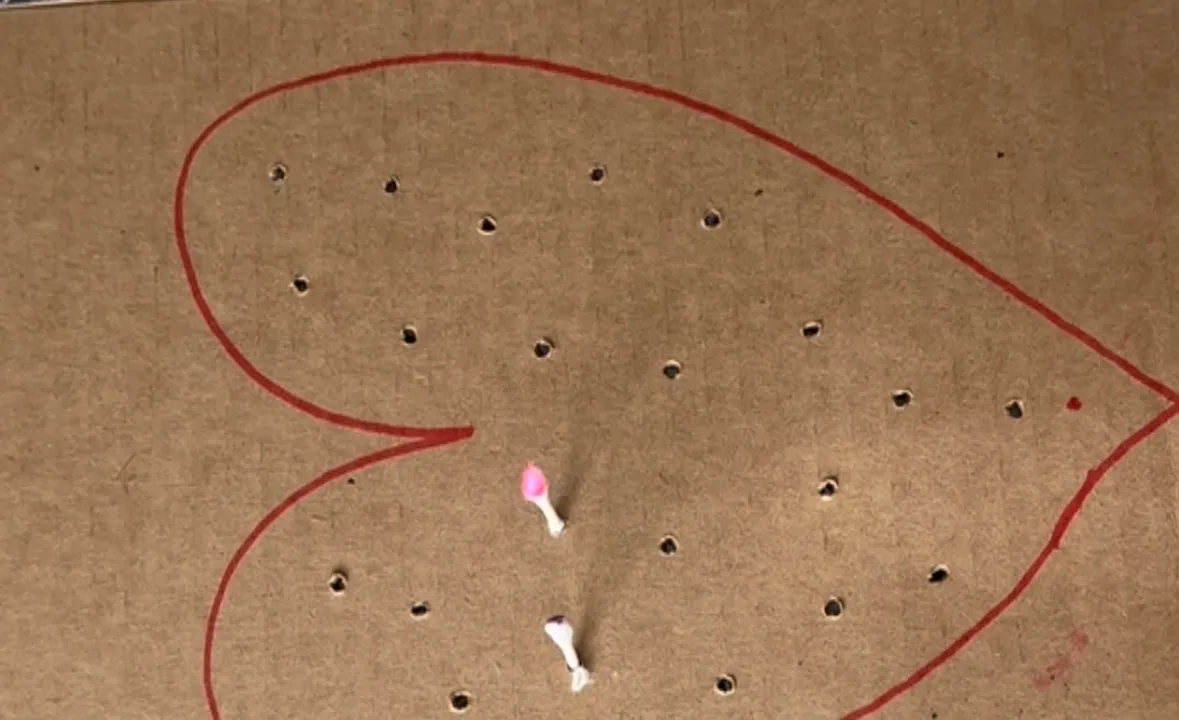
Draw a heart on a piece of cardboard. Poke holes inside the heart shape with a screwdriver. Color the tips of cut Q-tips with markers. Hand the board to your toddler and have her push the colored Q-tips through the holes. The Q-tip heart board is a sweet, photo-friendly activity that gave my toddler 3 minutes of attention before she lost interest. The 5 minutes of setup feels long for that play window.
I am still writing it up because it is a real fine motor exercise and it might hit a longer play window for a toddler in a different phase. Pushing a small Q-tip into a tight hole is hard precision work. If your toddler enjoys threading-style activities and is in a focus-heavy phase, the Q-tip heart board could be a 15-minute activity for her even though it was a 3-minute one for us.
Below is the setup, the materials, age tweaks for 2 through 4, what happened in our house, and the questions parents ask before trying it.
Why a Q-Tip Heart Board Works for Toddlers
Pushing a Q-tip into a small hole is one of the most precise fine motor moves a toddler does. The Q-tip is thin, the hole is just barely bigger than the stick, and the angle has to be near-perfect for the tip to slide in. This is the same precision skill she will use later for threading beads, lacing cards, and eventually writing.
The heart shape gives the activity a goal. As she fills the holes, the heart fills with color. That visible progress acts like a built-in reward for the work she is putting in. Even toddlers who do not engage long can usually get a few minutes in.
Color matching can layer on top. If you label each hole with a color stripe and color the matching Q-tips, she has both the precision challenge and a sorting challenge in one activity.
What You Need
- A piece of sturdy cardboard (cut from an old shipping box, about 8x8 inches or larger)
- A black marker for drawing the heart
- A screwdriver or thick metal skewer for poking holes
- 10-15 Q-tips
- 3-5 markers for coloring the Q-tip tips
- A pair of kid scissors for cutting one cotton end off each Q-tip
- Painters tape for taping the cardboard down
- A sensory table or low table
How to Set Up the Q-Tip Heart Board
- Draw a large heart shape on the cardboard with the marker, filling most of the board.
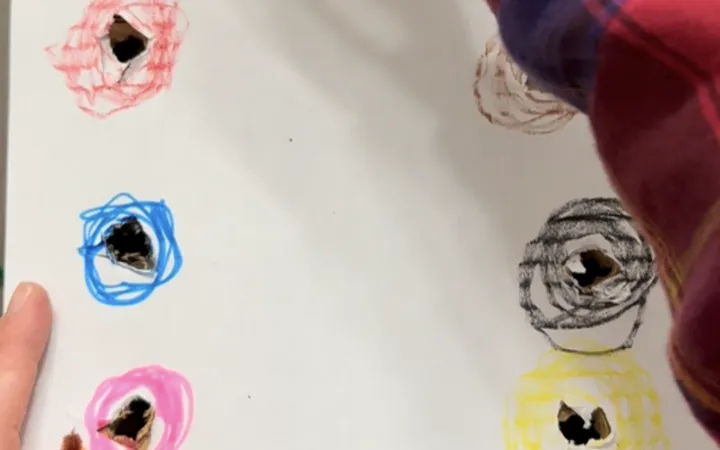
- Use the screwdriver to poke holes inside the heart, spacing them about an inch apart. Aim for 10-15 holes total.
- Cut one cotton tip off each Q-tip so only one cotton end remains. The cut end is what she will push through the hole.
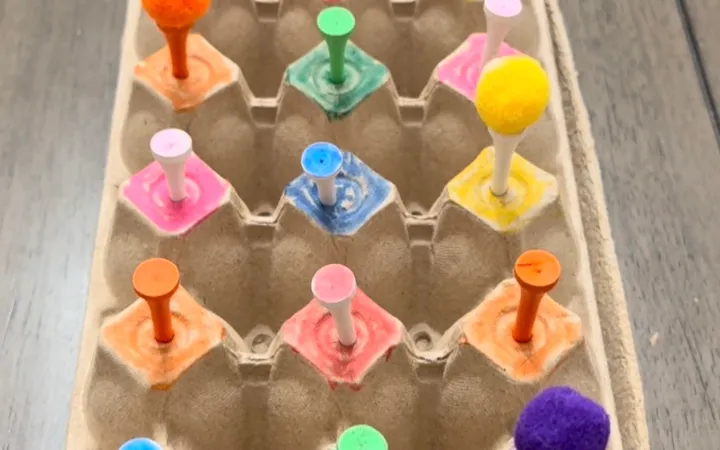
- Use markers to color the cotton tip of each Q-tip in different colors.
- Tape the cardboard heart down to a sensory table or low table so it does not slide while she works.
- Set the colored Q-tips in a small bowl next to the board and demonstrate pushing one through a hole, cotton-tip up.
Love this one? There are 75 more.
The 75 Toddler Activities Guide is a flip-through bank of screen-free activities, all using things you already have at home. Pick one, set it up, buy yourself 15–20 minutes.
See the 75 Activities Guide →Age Tweaks
Age 2: At 2, this is hard. Use a thicker dowel or chopstick instead of a Q-tip so the precision needed is lower. Fewer holes is also better (5 or 6). Skip the color step on the first try and just focus on the push-through motion.
Age 3: At 3, the standard setup works well. Adding a color matching layer (one colored hole per colored Q-tip) extends the play time and gives the activity a real goal.
Age 4: By 4, you can ask her to fill the heart in a specific pattern (alternating colors, or one color all around the edge first). Or set up two boards side by side and race the clock.
What Happened When We Did It
She held her attention for about 3 minutes, then moved on. The activity is a real fine motor workout, and at 3 minutes she had pushed in maybe 6 of the 12 Q-tips I had set out. That is decent precision work for her age, but the activity did not pull her back in for repeat sessions.
The setup was about 5 minutes, which is long for our house. Cutting the Q-tips and coloring the tips is fiddly work that does not lend itself to a quick pre-bedtime prep.
I am keeping the prepped board in case she wants to come back to it on a more focused day. The cardboard is durable and the colored Q-tips are reusable. If she does come back, the second session might run longer because the novelty of the setup will be lower and she can lean directly into the activity.
No energy to plan tomorrow's activity?
The 75 Toddler Activities Guide does the thinking for you. 75 ideas sorted by setup time and materials. Less mental load for you, a happy and engaged toddler for them.
Get the 75 Activities Guide →Common Issues and Troubleshooting
My toddler is not interested. The precision required for this activity makes it harder than it looks. If she is not in a focus-heavy mood, switch to a wider-hole version of the activity using a chopstick or a thicker craft stick instead of a Q-tip. The push-through motion is still good practice without the precision frustration.
She bailed in 2 minutes. This is the most common outcome for younger toddlers. The frustration of missing the hole repeatedly can shut a 2-year-old down. Pre-thread the first 2 or 3 Q-tips so she gets the visual win first, then let her continue.
The Q-tips are bending instead of going through. Either the holes are too small, or the cardboard is too thick. Use a thicker tool to widen the holes. Make sure the cardboard is single-ply, not corrugated double-ply, so the Q-tip is not getting caught between layers.
She is more interested in pulling the Q-tips back out. That is fine and still good fine motor practice. Pull-and-replace is its own valid activity with this same setup.
Frequently Asked Questions
What age is the Q-tip heart board good for? This activity works best for toddlers ages 2.5 to 4. Younger toddlers find the precision frustrating. Older toddlers benefit from the color matching and pattern-filling extensions.
Is this safe for toddlers who still mouth things? Cut Q-tips have an exposed wooden stick, which is a poke risk. If your toddler still mouths things, skip the cutting step and use whole Q-tips, or substitute with thicker craft sticks that have rounded ends.
How do I clean up after this activity? Pull the Q-tips out, store them with the cardboard board for next time. The whole prepped kit lives on a closet shelf and pulls out for the next session in 10 seconds.
Can I prep this activity ahead of time? Yes, and you should. The 5-minute setup is the bottleneck. Make the board and prep the Q-tips on a quiet evening, then pull out the kit any time you want to use it.
What if I do not have a screwdriver? A thick pencil, a metal skewer, or a kitchen chopstick all work for poking the holes. The hole only needs to be slightly larger than a Q-tip for the activity to work.
Mom to Mom
Every toddler engages differently. Mine got 3 minutes out of this and moved on. Yours might get 15 minutes if she is in a focused, precision-loving phase right now. The setup is more work than most of my go-to activities, but the prepped board is reusable for many sessions, so the per-session cost goes down over time.
When DIY activities do not land (and sometimes they do not), it helps to have a backup. The 75 Toddler Activities Guide is 75 screen-free activities you can flip through in seconds, all using stuff already in your house. When one does not land, open the guide and pick another in two minutes. No prep spirals, no Pinterest searching, no guilt.
Want tonight's dinner hour back?
Drop your email. I'll send you TONIGHT, a 3-step reset plan plus 4 setup-free activities for the meltdown hour.
By signing up, you agree to receive the guide and emails from Katie. Unsubscribe anytime.