Toy Rescue with Tape: A Toddler Sensory Bin Activity (Ages 2-4)

By Katie · Mom of 2 under 3. Founder, Screen Free Toddlers.
· 7 min read · @screenfree_toddlers
A toy rescue with tape across a sensory bin. Setup is under a minute. Honest review of how it landed with my toddler, plus tweaks for ages 2-4.
Time: 0 minutes (for us) | Age: 2-4 years | Setup: Under 1 minute | Mess Level: Low
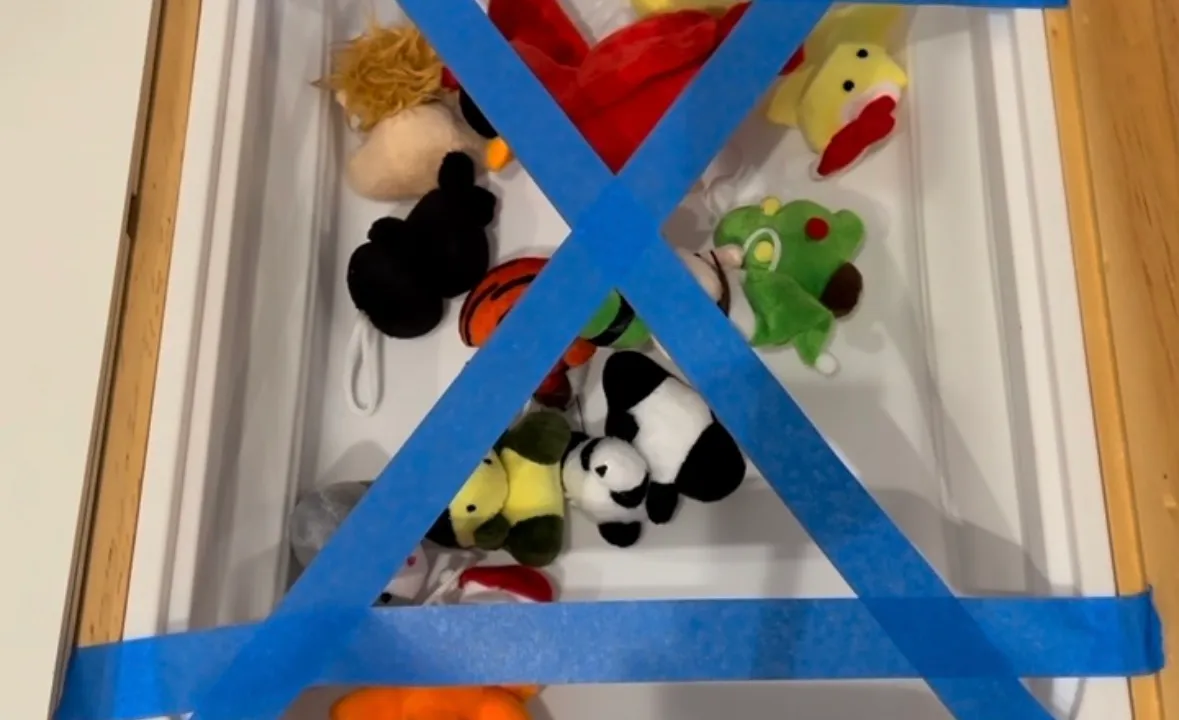
My toddler took one look at the toy rescue activity and walked away. Zero minutes of play. The activity itself is straightforward: put a few small toys into a sensory bin, criss-cross painters tape over the top of the bin to trap them, then hand her a pair of kid scissors or a toy picker to rescue them. I had seen versions of this activity work all over Instagram. In our house, it did not.
But here is the thing. The toy rescue with tape is still worth trying with your toddler, because every kid is different and the materials and setup are so simple that the cost of a “no” is basically nothing. Below is what happened, why I think it bombed in our house specifically, the developmental upside it would have given a kid who engaged, and the tweaks that might make it land for yours.
If your toddler rejects this one too, you are not stuck. The same sensory bin filled with water and a few cups is one of the most reliably engaging setups in our house, and it works as a backup whenever a more elaborate activity falls flat.
Why Toy Rescue with Tape Works for Toddlers
Toy rescue activities target a few skills at once. Cutting tape with kid scissors builds bilateral coordination, the skill of using both hands at the same time for different jobs (one hand stabilizes the tape, the other operates the scissors). Pulling a trapped toy out of a bin requires problem-solving and persistence. And the sensory bin itself, even empty, gives toddlers something to dig into.
The rescue framing is what makes this activity engaging for kids who do engage. There is a goal (free the toy), a tool (scissors or pinchers), and immediate feedback (toy comes out). That structure mirrors the pattern of every classic toddler-engaging activity: small obstacle, simple tool, visible reward.
For toddlers between 2 and 4, this is solid fine motor work disguised as a story. When it works, it works hard.
What You Need
- A shallow sensory bin or a deep baking dish
- 2-3 small toys (avoid her favorites, see the troubleshooting section below)
- Painters tape (about a foot, depending on bin size)
- Kid-safe scissors or toy pinchers (the kind shaped like ice cream scoopers work especially well)
How to Set Up the Toy Rescue
- Place the sensory bin or baking dish on a low table or on the floor where your toddler can reach all sides.
- Drop 2-3 small toys into the bin. Choose toys she does not have a strong attachment to.
- Criss-cross painters tape across the top of the bin so the toys are visibly trapped underneath the tape.
- Press the tape down firmly along the bin edges so it stays put when she pulls or snips at it.
- Hand her the kid scissors or pinchers and demonstrate snipping or pulling at the tape to free a toy.
- Step back and let her work the rest out.
Love this one? There are 75 more.
The 75 Toddler Activities Guide is a flip-through bank of screen-free activities, all using things you already have at home. Pick one, set it up, buy yourself 15–20 minutes.
See the 75 Activities Guide →Age Tweaks
Age 2: At 2, scissors are too advanced for most kids. Skip the scissors and use only the pinchers, or even her hands. Use less tape so the rescue happens fast and the dopamine hit comes sooner. Frustration shuts a 2-year-old down faster than almost anything else.
Age 3: At 3, kid scissors enter the picture. Show her how to snip the tape strands one by one. You can add more tape to extend the activity, or hide one toy completely under the tape and leave one toy partially visible to give her a graduated challenge.
Age 4: By 4, you can add a story. Tell her the toys are stuck and need a rescue mission. Time how long the rescue takes. Or set up two bins side by side and turn it into a race against the clock.
What Happened When We Did It
She walked away. Zero minutes. The reason, which I did not expect, was the toys I picked. I used little stuffies that belong to a small toy set she keeps on the counter. Apparently to her, those toys belong on the counter and should never be used in any other games. Cue the drama.
So this was not really a failure of the activity. It was a failure of toy selection on my part. If I had used random small toys she did not feel ownership over (a few duplicate figures, kitchen scoops, or random objects from a junk drawer), I think it would have been a different story.
We did not lose the morning, though. We pivoted. I dumped out the toys, refilled the bin with water, and gave her cups. She loved it. We did the same setup differently and it earned 7 minutes of independent play, which is solid for our house. Sometimes the lesson is not to abandon the bin. It is to abandon the original premise and use the same setup differently.
No energy to plan tomorrow's activity?
The 75 Toddler Activities Guide does the thinking for you. 75 ideas sorted by setup time and materials. Less mental load for you, a happy and engaged toddler for them.
Get the 75 Activities Guide →Common Issues and Troubleshooting
My toddler walked away in 30 seconds. Usually this is one of two issues. Either the toys you trapped are ones she has strong feelings about (favorites or toys she thinks belong in a specific place), or the tape is too aggressive and the rescue feels impossible. Use neutral toys she has no relationship with. Use less tape on the first try.
She is not interested in the rescue framing. Some toddlers are not motivated by goal-based play yet. For those kids, skip the tape entirely and turn the bin into a free-play sensory experience. Add water, dry beans, rice, or pom poms and let her dig with her hands or a scoop.
The tape is too hard for her to cut. Painters tape is the right choice because it tears easily compared to clear packing tape. If she still cannot cut it, replace the scissors with the pincher tool. Pinching and pulling is easier than snipping at this age. You can also pre-cut the tape into segments with small gaps so she only has to peel up a corner to free a toy.
She is bored after one rescue. Reset on the spot. Put the toy back, re-tape over it, and let her do it again. Toddlers love repetition more than novelty, but the activity needs to reset visually before they reload.
Frequently Asked Questions
What age is the toy rescue with tape activity good for? It works for toddlers ages 18 months to 4 years, with age-appropriate adjustments. Younger toddlers should use pinchers or hands instead of scissors and have minimal tape to cut through. Older toddlers can handle scissors, more layers of tape, and added challenges like a timed rescue.
Is this activity safe for toddlers who still mouth things? The painters tape itself is non-toxic, but the small toys and scissors require supervision. If you are using kid scissors, sit with her the entire time. If she is still mouthing everything, swap the scissors for pinchers and use larger toys that cannot be swallowed.
How do I clean up after this activity? Cleanup is fast. Peel the painters tape off the bin and throw it away. Painters tape is designed to come off cleanly without leaving residue. Put the toys away and wipe out the bin if it got dirty. Total cleanup time is under two minutes.
Why did my toddler reject this activity? The most common reasons are toy selection (favorites cause resistance), unclear instructions (she does not understand the rescue is the goal), or developmental readiness (the cutting motion is still too hard). Try again in a month with different toys.
What if I do not have kid scissors? Toy pinchers shaped like ice cream scoopers (the kind that come in many toddler kitchen sets) work perfectly. Kitchen tongs, regular tongs, or even her hands work too. The scissors are not strictly required for the activity to work.
Mom to Mom
You know your toddler better than I know mine. My girl has very specific opinions about which toys belong where, and that meant this one was a hard no in our house on the first try. That does not mean yours will reject it. If the setup is easy and you have the materials, give it a whirl. The worst case is 30 seconds wasted and a quick pivot to a different sensory bin setup.
When DIY activities do not land (and sometimes they do not), it helps to have a backup. The 75 Toddler Activities Guide is 75 screen-free activities you can flip through in seconds, all using stuff already in your house. When one does not land, open the guide and pick another in two minutes. No prep spirals, no Pinterest searching, no guilt.
Want tonight's dinner hour back?
Drop your email. I'll send you TONIGHT, a 3-step reset plan plus 4 setup-free activities for the meltdown hour.
By signing up, you agree to receive the guide and emails from Katie. Unsubscribe anytime.