Rainbow Fizzy Baking Sheet: A 15-Minute Toddler Sensory Activity (Ages 2-4)

By Katie · Mom of 2 under 3. Founder, Screen Free Toddlers.
· 8 min read · @screenfree_toddlers
Sprinkle baking soda over food coloring, drop vinegar with a pipette, watch the colors swirl. 90-second setup, 15 minutes of play for ages 2-4.
Time: 15 minutes | Age: 2-4 years | Setup: 1-2 minutes | Mess Level: High
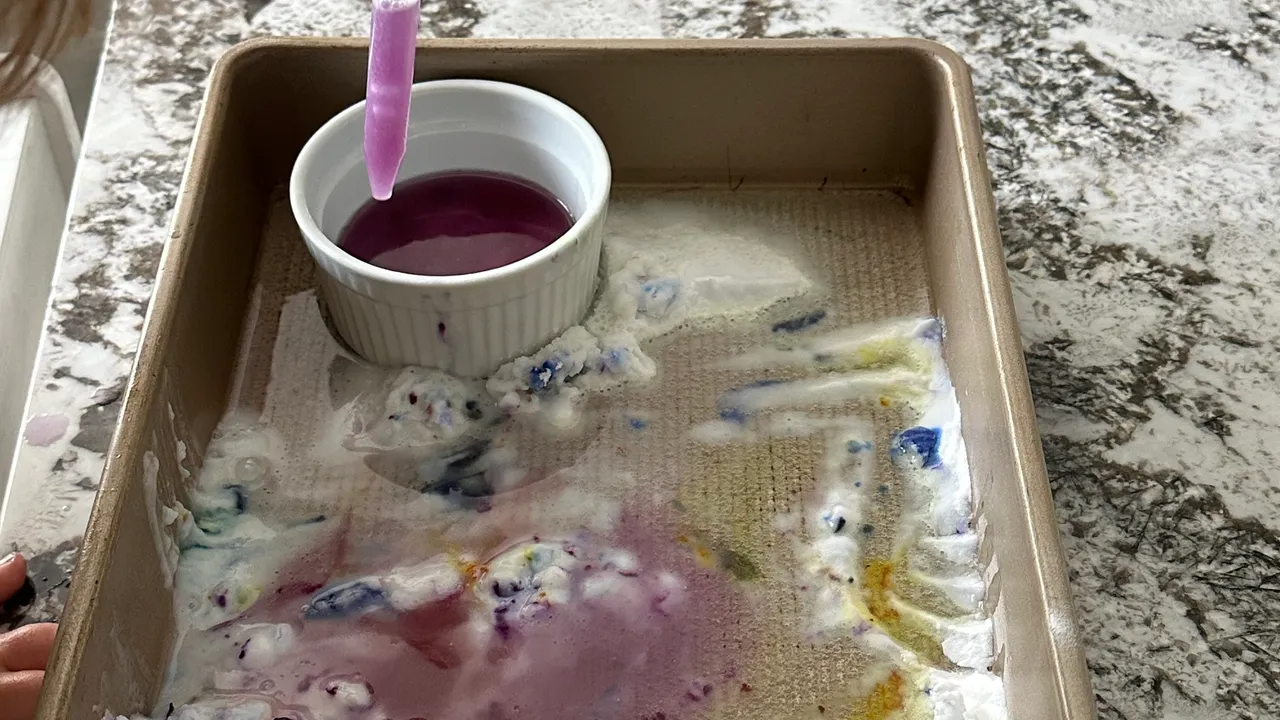
My toddler asked for a “messy activity” yesterday afternoon. We’ve done baking soda and vinegar a bunch of different ways. She loves it every time, but I wanted to try a new spin. The food coloring was sitting in the cabinet. The baking sheet was clean. I dribbled four colors onto the sheet, dumped baking soda over the top, and handed her a pipette of vinegar.
She worked it for 15 minutes. The colors bloomed up through the powder, mixed in unexpected combinations (purples, greens, a really weird brown), and eventually settled into one muddy color. The fizz was the same as plain baking soda and vinegar. The reveal was what made her stay.
Here’s how to set it up, why the color layer keeps them engaged longer, and what to do when they decide to dump the whole ramekin of vinegar in.
Why Rainbow Fizzy Baking Sheet Works for Toddlers
This activity stacks three developmental targets on top of each other. The first is cause-and-effect. Baking soda meeting vinegar releases carbon dioxide, which creates the fizz. The CDC’s developmental milestones flag this age window as when toddlers are explicitly working on figuring out how things behave when they act on them. A drop producing a visible bubble is that lesson in compressed form.
The second is fine motor. Squeezing a pipette uses the same hand muscles toddlers need for eventually holding a pencil, drawing letters, and using scissors. Most baking soda activities use a spoon or a cup, which doesn’t build the same grip. The pipette is the meaningful upgrade.
The third is the visual reveal. Without food coloring, baking soda and vinegar is satisfying but visually repetitive. With color hidden under the powder, every drop produces a small surprise. A bloom of purple. Then green. Then a corner where two colors meet and turn brown. For toddlers who already love the plain version, this is the variation that keeps it fresh.
You’ll notice the same focused energy you see when they’re really into a magnatile build. Concentration, leaning in close, repeating the squeeze motion to test what happens next.
What You Need
- A baking sheet or shallow tray. A standard rimmed sheet pan works. The rim keeps the fizz contained when it overflows the powder.
- 3 to 5 colors of liquid food coloring. The basic 4-pack from the grocery store is fine. Brighter colors show through the baking soda better than pastels.
- About 1 cup of baking soda. Enough to fully cover the food coloring drops in a thin layer.
- About 1/2 cup of white vinegar. Plain distilled white is cheapest and works the same as fancy versions.
- A pipette or eye dropper. Cheap on Amazon in packs of 20.
- A ramekin or small bowl for the vinegar.
Total cost: under $5 if you don’t have any of it. Most of it is probably already in your kitchen.
How to Set Up the Rainbow Fizzy Baking Sheet
- Place the baking sheet on a hard floor or a wipeable surface. Skip the dining table unless you’re ready to mop after.
- Squeeze 10 to 15 drops of each food coloring around the sheet. Don’t space them perfectly. Some clusters are good.
- Sprinkle baking soda over the entire sheet until the food coloring is fully covered. The layer should be thick enough that the colors are hidden from view.
- Pour vinegar into the ramekin and set it on the sheet next to the powder.
- Hand your toddler the pipette and let them figure out what to do.
The first drop is the moment that hooks them. The vinegar hits the baking soda, fizzes, and the color underneath blooms up to the surface. If they need a nudge, demonstrate one drop and then back off.
If the activity slows down, give it a soft refresh. Sprinkle another spoonful of baking soda over a spot that’s already gone brown and they get to do the reveal all over again. You can do this two or three times before the vinegar pool gets too saturated to react. If your toddler wants a related activity back-to-back, the basic baking soda and vinegar version is a good follow-up when the rainbow run has finished.
Love this one? There are 75 more.
The 75 Toddler Activities Guide is a flip-through bank of screen-free activities, all using things you already have at home. Pick one, set it up, buy yourself 15–20 minutes.
See the 75 Activities Guide →Age Tweaks
For 2-Year-Olds
A 2 year old will probably dump the vinegar instead of squeezing the pipette, and that’s fine. Pre-fill the pipette for them and hand it over, or give them a small measuring cup of vinegar to pour. Expect 5 to 10 minutes of engagement, sometimes less. The novelty of the color bloom is what holds them. When the colors all turn brown, that’s usually the end of the run.
For 3-Year-Olds
This is the sweet spot age. A 3 year old can typically operate the pipette, will narrate what they see (“look mom, it’s purple now”), and stays engaged 10 to 20 minutes. Add a small piece of paper next to the sheet and let them dip the pipette in the colored fizz to make a print. The color print extends the activity by another 5 to 10 minutes.
For 4-Year-Olds
A 4 year old will want to predict. Show them a clear drop on white paper, then a clear drop on the colored sheet, and ask what they think will happen. The hypothesis layer adds language and reasoning practice. They can also handle adding their own baking soda refills, which gives them a sense of running the experiment themselves. Expect 15 to 25 minutes if you let them rebuild it.
What Happened When We Did It
I set this up at 3pm on a Saturday. She had asked for a messy activity and the food coloring was right there on the counter.
I told her I had a “rainbow activity” and she came over without asking what it was. The first drop produced a tiny green bubble and she said “what is that” in the way 2 year olds do when they don’t actually want an answer. Then she added five more drops and started narrating each color.
She worked the sheet for about 12 minutes. Then she asked for more “white stuff.” I refilled the baking soda and she got another 4 minutes out of it. Total was around 16 minutes. I was three feet away the whole time, drinking water, watching her concentrate.
The colors did turn brown at the end, which she pointed out with some disappointment. I told her that’s what happens when all the colors mix. She thought about that for a few seconds and went to find something else.
No energy to plan tomorrow's activity?
The 75 Toddler Activities Guide does the thinking for you. 75 ideas sorted by setup time and materials. Less mental load for you, a happy and engaged toddler for them.
Get the 75 Activities Guide →Common Issues and Troubleshooting
My toddler is dumping the whole vinegar bowl in instead of using the pipette.
This is fine for a 2 year old but the activity ends faster. If you want it to last longer, swap the ramekin for a smaller container that holds less vinegar, or give them the pipette pre-filled and refill it yourself between rounds. Don’t fight the dump. Just refill once and let them see the difference.
The colors mixed into brown immediately.
You probably used too much vinegar or stirred the sheet. Don’t stir. Don’t squeeze a single big puddle. Sprinkle small drops in different spots and let the reactions stay separate. If it’s already brown, sprinkle more baking soda over the top and let them start over.
My toddler doesn’t want to use the pipette.
That’s normal. Some 2 year olds find the squeeze motion frustrating. Hand them a spoon or a small cup and let them pour. The acid-base reaction is the same. Pipette is a fine motor upgrade, not a requirement.
The fizz isn’t very dramatic.
Your baking soda might be old. It loses potency. Open a fresh box and try again. Vinegar can also lose acidity in an opened bottle that’s been sitting a year. Both ingredients are cheap to replace.
Frequently Asked Questions
Is this activity safe if my toddler still mouths things?
Food coloring, baking soda, and vinegar are all food-safe so a small taste is not dangerous. Vinegar tastes bad enough that most toddlers learn fast. That said, supervise closely if your child still puts things in their mouth, and store the pipette out of reach when you’re done.
How long does the activity last before it stops fizzing?
About 15 to 20 minutes of active reactions, longer if you do a baking soda refresh in the middle. Once the vinegar pool gets saturated with dissolved baking soda, the fizz stops. At that point you can dump and restart with fresh ingredients, or call it done.
What’s the easiest way to clean up the baking sheet?
Tip the contents into the trash, wipe the sheet with a paper towel, then run it under hot water. The food coloring will stain a wooden cutting board but it rinses off metal pans easily. Don’t use this activity on a porous surface like an unfinished wood floor.
Can I do this without food coloring?
Yes, the plain version is still a great activity. The food coloring adds a visual reveal and color mixing layer that makes it feel new, especially if your toddler has done plain baking soda and vinegar already. If you’re running this for the first time, the basic version is a totally fine place to start.
Will the colors stain my floor or counter?
Concentrated food coloring will stain grout, unsealed wood, and some lighter countertops. The fizzy diluted version is less likely to stain but I’d still set it up on a hard floor or a sheet pan that contains the mess. Don’t do this directly on a kitchen island.
Mom to Mom
I keep coming back to baking soda and vinegar because there are about ten ways to vary it and every version buys you real time. This rainbow one is my favorite because the visual reveal makes my daughter slow down. She’s not just dumping. She’s watching.
Some days she’ll do 20 minutes on this. Some days she’ll dump the vinegar in 4 minutes and ask to be done. Both are fine. The goal isn’t a perfect run. It’s having one thing in your back pocket for the 3pm “no” loop.
If this activity worked, the rest of the library is the same flavor. The Library of 75 Toddler Activities is low-prep, real-life tested ideas, organized by what your toddler needs that day (focus, calm, fine motor, energy out). All using stuff you already have.
Want tonight's dinner hour back?
Drop your email. I'll send you TONIGHT, a 3-step reset plan plus 4 setup-free activities for the meltdown hour.
By signing up, you agree to receive the guide and emails from Katie. Unsubscribe anytime.