Toddler Fizzy Play: A Baking Soda and Vinegar Sensory Activity (Ages 2-4)

By Katie · Mom of 2 under 3. Founder, Screen Free Toddlers.
· 6 min read · @screenfree_toddlers
Add vinegar to baking soda with a pipette and watch the fizz. 2-minute setup, 30+ minutes of focused sensory play for toddlers ages 2-4. Step-by-step.
Time: 30+ minutes | Age: 2-4 years | Setup: 2 minutes | Mess Level: Medium
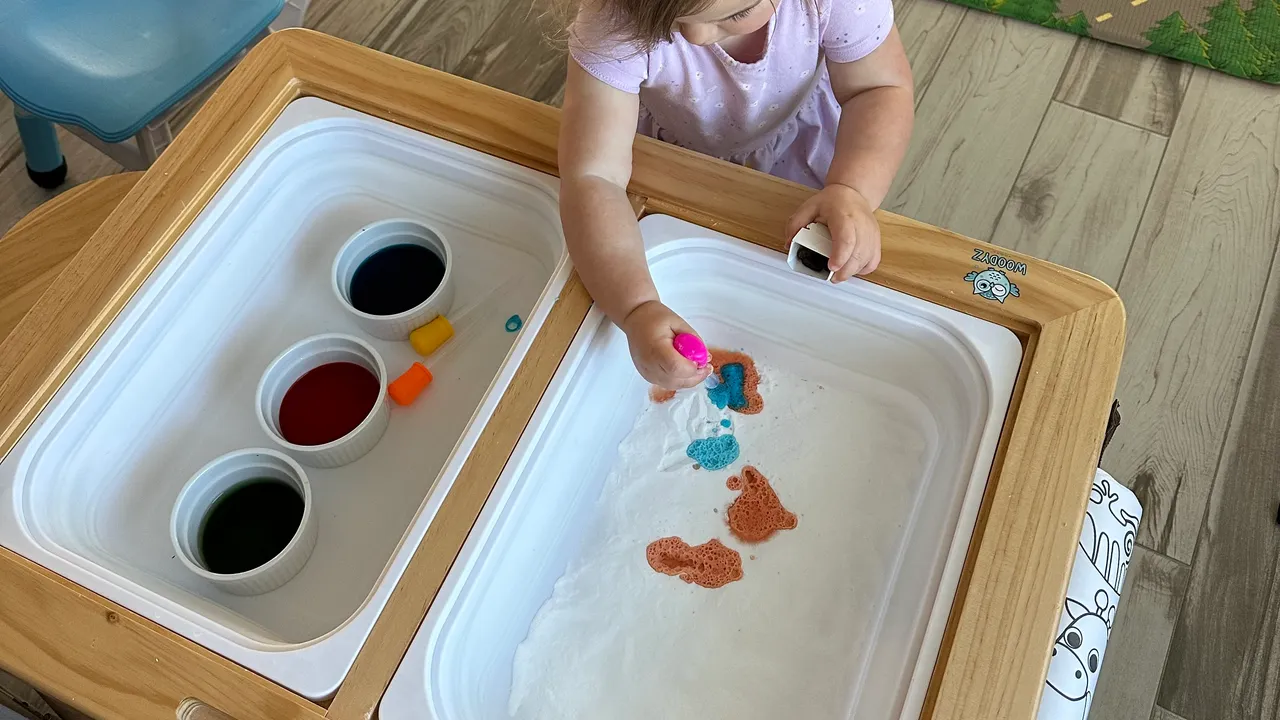
Pour baking soda into a sensory bin. Fill a few small ramekins with vinegar and a few drops of food coloring in each. Hand your toddler a pipette. Watch her drip vinegar into the baking soda and squeal every time it fizzes. The toddler fizzy play activity is one of the highest-engagement, most photo-friendly setups in the entire screen-free playbook. My toddler stayed with this for 30+ minutes the first time and asked for baking soda in our kitchen for weeks afterward.
The reason this lands is the cause-and-effect payoff. Every drop of vinegar produces a visible fizz. Every fizz is a tiny chemistry reaction happening in front of her. For a toddler obsessed with making things happen, this is gold. The pipette adds a fine motor layer (squeeze, release, aim) on top of the chemistry.
Below is the exact setup, the materials, age tweaks for 2 through 4, what happened in our house, and the questions parents ask before trying it for the first time.
Why Toddler Fizzy Play Works
Baking soda and vinegar reactions check every box for what makes a toddler activity stick. The action is repeatable (each drop produces fizz). The result is dramatic enough to hold attention without being scary. The setup is taste-safe (both ingredients are non-toxic and edible in small quantities). And the chemistry is a real lesson disguised as play.
The pipette layer adds important fine motor practice. Squeezing the bulb to draw vinegar in, then releasing to drip it out, builds the same hand muscles she will use for spray bottles, glue bottles, and eventually whatever else needs fine grip strength. Many toddlers do not get pipette practice unless you set it up.
Sensory benefits stack on top. The fizz produces a soft hissing sound and a visual texture that is genuinely interesting to small hands. Some toddlers will reach in to feel the bubbles. That is fine and adds another sensory layer.
What You Need
- 1 cup of baking soda (more if your bin is large)
- 1 cup of white vinegar
- A sensory bin or shallow baking dish
- 3-5 small ramekins or small bowls
- 3-5 colors of food coloring (a few drops each)
- 1-2 plastic pipettes or eyedroppers
- A towel underneath the bin
How to Set Up Toddler Fizzy Play
- Lay a towel under your sensory bin or work surface. The fizz can splatter outside the bin during particularly enthusiastic drops.
- Pour the baking soda evenly into the bin so it covers the bottom in a layer about half an inch deep.
- Fill each ramekin with about a quarter cup of vinegar, then add a few drops of food coloring to each ramekin so the vinegar takes on a different color in each one.
- Place the ramekins in a row beside or inside the bin, easy for your toddler to reach.
- Show her how to squeeze the pipette into a ramekin, draw up colored vinegar, and drip it onto the baking soda. Wait for the fizz.
- Hand her the pipette and let her go. Refill the ramekins as needed.
Love this one? There are 75 more.
The 75 Toddler Activities Guide is a flip-through bank of screen-free activities, all using things you already have at home. Pick one, set it up, buy yourself 15–20 minutes.
See the 75 Activities Guide →Age Tweaks
Age 2: At 2, pipettes can be hard to operate. Pre-fill the pipette for her on the first few rounds, or use a turkey baster instead which is easier to squeeze. Stick with one or two colors so the bin does not turn into a brown mess of mixed colors quickly.
Age 3: At 3, the standard pipette setup works great. Add a sorting layer: ask her to drip only red vinegar in this corner of the bin and only blue vinegar in that one. The colors will mix eventually, but the intentionality builds her thinking.
Age 4: By 4, you can introduce the chemistry. “Baking soda is a base. Vinegar is an acid. When they mix, they make bubbles.” She will not understand the technical part, but she will love having a name for what is happening.
What Happened When We Did It
She stayed with this for 30+ minutes, which is at the very top end of any activity in our house. The fizz reaction was the hook. She did not get bored of the bubbling for the entire session.
The thing that surprised me: she helped clean up. After 30 minutes of dripping and watching, she walked the bin to the sink with help and rinsed it out. She has been asking for baking soda by name ever since. It is officially one of her favorite activities.
The setup took about 2 minutes including measuring the baking soda and pouring vinegar into the ramekins. Cleanup was a few minutes: rinse the bin, rinse the ramekins, wash the pipette, wipe up any vinegar splatter.
No energy to plan tomorrow's activity?
The 75 Toddler Activities Guide does the thinking for you. 75 ideas sorted by setup time and materials. Less mental load for you, a happy and engaged toddler for them.
Get the 75 Activities Guide →Common Issues and Troubleshooting
The fizz is not as dramatic as the videos. You probably need more vinegar per drop, or more baking soda. The reaction works best when the baking soda is fresh (not stale) and when the vinegar is full strength (not diluted). Adjust the ratio if the fizz is weak.
She is dumping the entire ramekin instead of using the pipette. This is normal at younger ages. Either embrace the dump (it produces a satisfying mass fizz), or use ramekins with smaller openings that pour slower. You can also tape the ramekins down so they cannot be picked up, only dripped from.
The bin is overflowing with foam. Use less baking soda, or a deeper bin. Some sessions just produce more reaction than expected. Keep a towel close and have a smaller bin standing by as a transfer for excess foam.
Frequently Asked Questions
What age is toddler fizzy play good for? This activity works for toddlers ages 18 months to 5 years. Younger toddlers focus on the visual and the drip. Older toddlers add color sorting, color mixing, and basic chemistry vocabulary.
Is this safe for toddlers who still mouth things? Yes. Baking soda and vinegar are both edible (vinegar tastes terrible, which is its own deterrent). Food coloring is non-toxic. The pipette is the only piece to watch for small parts, so supervise closely if she still mouths everything.
How do I clean up after fizzy play? The bin rinses clean with water in the sink. The ramekins go in the dishwasher. Pipettes can be rinsed and reused. The towel goes in the laundry. Total cleanup is about 5 minutes.
Can I prep this activity ahead of time? The dry baking soda can sit in the bin for hours, but the vinegar in ramekins should be poured fresh. The food coloring is the only thing that has to be added when you are ready to start.
What if I do not have pipettes? Use a turkey baster, an eyedropper, a small spoon, or even let her pour straight from the ramekin (messier but it works). The pipette adds fine motor practice but it is not strictly required.
Mom to Mom
The 30+ minute play window made me rethink my whole mental model of what a “messy activity” can be. The cleanup was nothing compared to the play, and she now asks for baking soda by name. This one is going into the regular rotation.
Toddler fizzy play is great when you have 2 minutes and the basics on hand. When you do not, the 75 Toddler Activities Guide does the thinking for you. 75 screen-free activities you can flip through in seconds, all using stuff already in your house. Pick one, set it up, and buy yourself 15-20 minutes. No prep spirals, no Pinterest searching, no guilt.
Want tonight's dinner hour back?
Drop your email. I'll send you TONIGHT, a 3-step reset plan plus 4 setup-free activities for the meltdown hour.
By signing up, you agree to receive the guide and emails from Katie. Unsubscribe anytime.