Pom Poms in Water: A 10-Minute Toddler Sensory Bin Activity (Ages 2-4)

By Katie · Mom of 2 under 3. Founder, Screen Free Toddlers.
· 6 min read · @screenfree_toddlers
Drop pom poms into a water sensory bin and let your toddler scoop them out. 1-minute setup, 10+ minutes of focused play for toddlers ages 2-4.
Time: 10+ minutes | Age: 2-4 years | Setup: 1 minute | Mess Level: Medium
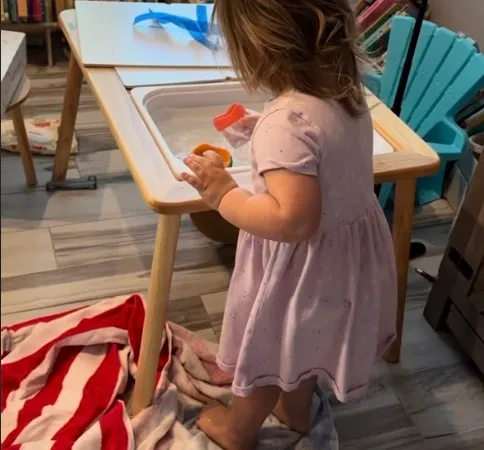
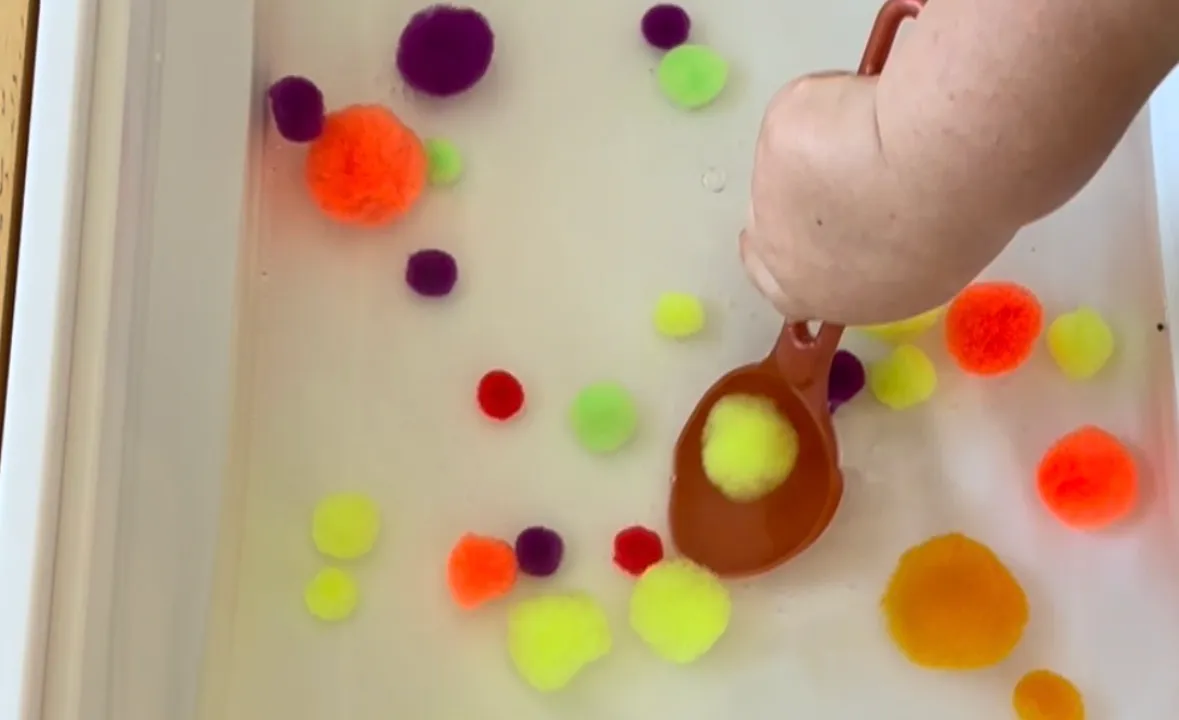
Pour an inch of water into a sensory bin. Drop in a handful of pom poms in different colors. Hand your toddler a large kitchen spoon. Watch her scoop pom poms out of the water and dump them back in. The pom poms in water activity is one of the most reliable 10+ minute setups in our house, and it took me about a minute to put together the first time.
The genius of this activity is the resistance. Wet pom poms are heavier than dry ones. They stick to each other in the water. Scooping them up requires more focus than scooping dry objects, which means more concentrated play. And dumping them back in feels satisfying because of the splash.
Below is the setup, materials, age tweaks for 2 through 4, what happened in our house, and the questions parents ask before trying it.
Why Pom Poms in Water Works for Toddlers
This activity stacks four mechanics that toddlers love. First is water play, which is calming and sensory. Second is scooping, which builds wrist control and the same motor patterns toddlers use for self-feeding. Third is the dump-and-restart cycle, which is one of the most reliable engagement loops in the toddler world. Fourth is color (the pom poms are visible underwater), which adds a soft sorting layer.
The wet-pom-pom factor is the secret. Dry pom poms scoop too easily and the activity loses challenge. Wet pom poms cluster, stick, and resist, which means each scoop produces a different result. That unpredictability keeps her looking, predicting, and scooping again.
For toddlers in the dump-everything phase, this is one of the cleanest ways to channel that drive into a contained activity.
What You Need
- A shallow sensory bin or a deep baking dish
- Water (about an inch deep)
- A large bag of pom poms in mixed colors (about 30-40 pom poms)
- A large kitchen spoon, ladle, or slotted spoon
- A second bowl or container for scooped-out pom poms
- A towel underneath the bin
How to Set Up the Pom Poms in Water Bin
- Lay a towel under your sensory bin or on the floor where she will play.
- Place the bin on the towel and pour about an inch of water into it.
- Drop the pom poms into the water. They will spread out, with some floating and some sinking, depending on how saturated they get.
- Place the second bowl next to the bin so she has somewhere to scoop the pom poms into.
- Hand her the spoon and demonstrate scooping a pom pom out of the water and dumping it into the bowl.
- Step back and let her work.
Love this one? There are 75 more.
The 75 Toddler Activities Guide is a flip-through bank of screen-free activities, all using things you already have at home. Pick one, set it up, buy yourself 15–20 minutes.
See the 75 Activities Guide →Age Tweaks
Age 2: At 2, use a smaller spoon (a serving spoon or a tablespoon) for easier control. Use larger pom poms (1.5 inches or bigger) so they are easier to scoop and not a choking risk if mouthed.
Age 3: At 3, the standard kitchen spoon works great. Add a sorting layer: ask her to scoop only the red pom poms first, then the blue, then the yellow. Or set out two bowls and have her sort by color as she scoops.
Age 4: By 4, you can add a counting goal or a timed challenge. “Can you scoop 10 pom poms in a minute?” Or “How many of each color are there?” The counting layer extends the activity time.
What Happened When We Did It
She stayed with this for 10+ minutes the first round. The scooping was satisfying enough that she did it dozens of times before she even started looking at the colors. After about 5 minutes, she started dumping the scooped pom poms back into the water and starting over, which is the dump-and-restart cycle that adds another 5+ minutes of play.
What surprised me about this activity was how much focus she had. She was not asking me for anything for the entire 10 minutes. She was working through the bin, scooping, sorting (sort of), and dumping, completely on her own.
The setup was fast (a minute, including pouring the water and dumping the pom poms in). Cleanup was a few minutes: pour the water out, fish the pom poms out of the sink, and lay them on a towel to dry.
No energy to plan tomorrow's activity?
The 75 Toddler Activities Guide does the thinking for you. 75 ideas sorted by setup time and materials. Less mental load for you, a happy and engaged toddler for them.
Get the 75 Activities Guide →Common Issues and Troubleshooting
The pom poms are too saturated to use again. Wet pom poms can be reused once they dry, but they shrink and clump as they dry. Lay them flat on a towel for a few hours and fluff them when dry. If they are too far gone, accept that some pom poms become single-use and toss the worst offenders.
She is splashing water out of the bin. Use a deeper bin with higher walls. Some splashing is normal at this age and is part of the play. The towel underneath catches the worst of it.
She is dumping the entire bin onto the floor. This is a control issue. Stay within arm’s reach to redirect if she starts to lift the bin. You can also use a smaller, heavier bin that is harder for her to tip.
Frequently Asked Questions
What age is the pom poms in water activity good for? This activity works for toddlers ages 12 months to 4 years. Younger toddlers (12-18 months) need close supervision and larger pom poms. Older toddlers can sort, count, and use more advanced tools like slotted spoons or tongs.
Is this safe for toddlers who still mouth things? Use only larger pom poms (1.5 inches or bigger) so they cannot be swallowed. Supervise closely. Wet pom poms are not toxic if mouthed, but they can be a choking risk if she swallows one whole.
How do I clean up after this activity? Pour the water into the sink, scoop the wet pom poms out and lay them on a towel to dry. Wipe down the bin. The towel goes in the laundry. Total cleanup is 5 minutes.
Can I prep this activity ahead of time? Not really. The water and pom poms have to be set up just before play because dry pom poms become wet pom poms quickly. The towel and spoon can be staged in advance.
What if I do not have a kitchen spoon? A ladle, a slotted serving spoon, a large measuring cup, or even her hands all work. The spoon adds a tool layer but the activity works without it.
Mom to Mom
This is one of those activities I keep on my mental shortlist because it is so reliable. Setup is a minute, engagement is solid, cleanup is manageable. If your toddler likes water play and dumping, this one is going to land.
The pom poms in water activity is great when you have a minute and a sensory bin on hand. When you do not, the 75 Toddler Activities Guide does the thinking for you. 75 screen-free activities you can flip through in seconds, all using stuff already in your house. Pick one, set it up, and buy yourself 15-20 minutes. No prep spirals, no Pinterest searching, no guilt.
Want tonight's dinner hour back?
Drop your email. I'll send you TONIGHT, a 3-step reset plan plus 4 setup-free activities for the meltdown hour.
By signing up, you agree to receive the guide and emails from Katie. Unsubscribe anytime.