Water and Cups in a Sensory Bin: A 30-Second Toddler Activity (Ages 2-4)

By Katie · Mom of 2 under 3. Founder, Screen Free Toddlers.
· 7 min read · @screenfree_toddlers
Pour water into a sensory bin, hand your toddler some cups, and watch her dump and pour. 30-second setup, 7 minutes of play. Step-by-step for ages 2-4.
Time: 7 minutes | Age: 2-4 years | Setup: 30 seconds | Mess Level: Medium
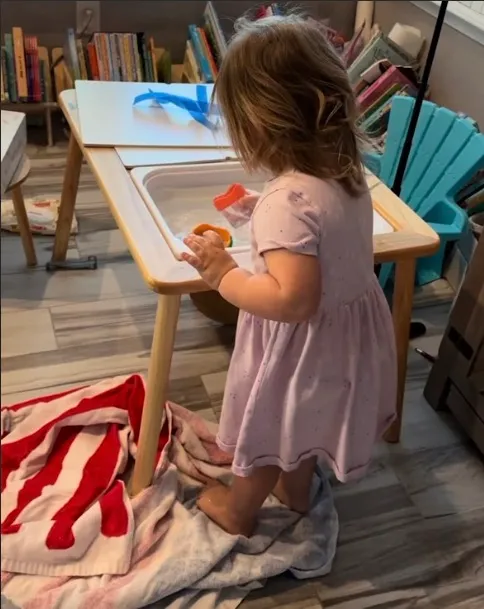
Pour an inch of water into a sensory bin. Drop in two or three cups. That is the setup. The water and cups sensory bin is, at this point, the most reliably engaging 30-second-prep activity in our house. My toddler stayed with this for 7 minutes the first time I set it up, and that was after she had just rejected a more elaborate activity I spent more time setting up.
That is the lesson I keep relearning. The simplest setups often win the longest play windows. The reason is dumping. Toddlers between 18 months and 3 years are obsessed with the act of moving water from one container to another. Add a few cups of different sizes and you have built in a self-directed lesson in volume, gravity, and pouring control without saying a word.
This is also the activity I pivoted to after a more complex toy rescue setup fell flat earlier the same morning. Same bin. Less setup. Way better outcome. If you are already standing at the kitchen sink wondering what to do with your toddler in the next 10 minutes, this is the answer most days.
Below is the setup, the materials, age tweaks for 2 through 4, what happened in our house, and the questions parents ask before trying it.
Why a Water and Cups Sensory Bin Works for Toddlers
The water and cups sensory bin is one of the most-cited Montessori-aligned activities for good reason. Pouring water from one cup into another teaches volume, gravity, and pouring control. When she overfills a cup, water runs over, and she gets immediate feedback. When she pours slowly, the water stays in. That is real, embodied physics learning at age 2.
The motor benefits stack on top. Lifting a cup of water builds shoulder and arm strength. Two-handed pouring builds bilateral coordination. Gripping the cup handle (or the cup rim, depending on the cup) uses the same pincer grasp she will need for a pencil.
There is a sensory layer too. The temperature of the water, the splash, the way water beads on her hands. All of that is calming and regulating for most toddlers, especially ones who are dysregulated at the end of the day.
What You Need
- A shallow sensory bin or a deep baking dish (a baking pan works in a pinch)
- Water (just enough to cover the bottom of the bin, about an inch deep)
- 2-3 cups of varying sizes (plastic kid cups, measuring cups, or food storage containers)
- A towel to put underneath the bin (water will splash, this is non-negotiable)
How to Set Up the Water and Cups Bin
- Lay a large towel on the floor or a low table. The towel is mandatory unless you want to mop after.
- Place the sensory bin or baking dish on top of the towel.
- Pour about an inch of water into the bin. You do not need a lot. More water means more potential mess and not necessarily more play.
- Drop two or three cups into the water, varying the sizes (one big, two small) so she can pour between them.
- Roll up her sleeves or change her into something you do not mind getting wet.
- Step back and let her go. Do not narrate or instruct. The activity is self-directing.
Love this one? There are 75 more.
The 75 Toddler Activities Guide is a flip-through bank of screen-free activities, all using things you already have at home. Pick one, set it up, buy yourself 15–20 minutes.
See the 75 Activities Guide →Age Tweaks
Age 2: At 2, fewer cups is better. Use just two of similar sizes so the pouring concept is clear. Stay within arm’s reach in case she decides to dump the whole bin (a real risk at this age). A taller-sided bin contains the splash zone better.
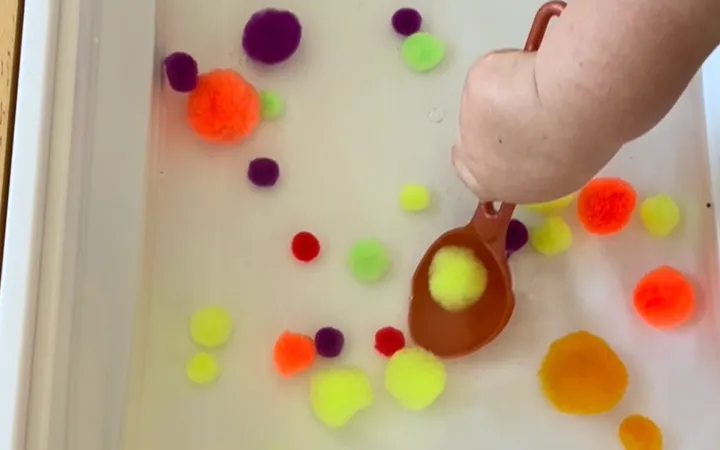
Age 3: At 3, add cups of dramatically different sizes (a measuring cup, a small ramekin, a tall narrow cup) so she can experiment with volume. Drop in a few pom poms or rubber ducks for things to scoop. Add a turkey baster or eyedropper to introduce a new tool.
Age 4: By 4, you can add a goal. Mark fill lines on the cups with a marker (or a piece of tape) and challenge her to fill each cup to the line. Add food coloring to make the water visible. Set up two bins, one with colored water and one empty, and ask her to transfer all the water across.
What Happened When We Did It
She stayed with this for 7 minutes of solid independent play, which is solid for our house. The funny part is, this activity was never the plan. I had set up a more elaborate toy rescue in a sensory bin that she rejected immediately. I needed to salvage the morning. So I dumped the original setup, refilled the bin with water, and handed her cups.
She poured. She dumped. She poured again. She dumped both cups together. She poured the whole bin onto the towel at one point, then went back to pouring within the bin. Total play window was about 7 minutes before she moved on.
She loved this because she loves to dump stuff. That is the whole secret. If your toddler is in the dump-everything phase, this activity gives her permission to dump in a contained way. Setup time was 30 seconds. Cleanup was wringing out the towel and emptying the bin into the sink, maybe two minutes total.
No energy to plan tomorrow's activity?
The 75 Toddler Activities Guide does the thinking for you. 75 ideas sorted by setup time and materials. Less mental load for you, a happy and engaged toddler for them.
Get the 75 Activities Guide →Common Issues and Troubleshooting
The water is everywhere. This is mostly a containment problem, not an activity problem. Use a deeper bin with higher walls. Put the bin inside a larger boot tray or on a shower curtain. Lay multiple towels under and around the bin. Or move the activity outside if the weather allows.
My toddler dumped the whole bin in 30 seconds. That is normal at certain ages, especially around 18 months to 2 years. Refill it. The dumping itself is the activity for some kids. Once she has dumped a few times, she usually settles into the more controlled pouring.
She is not interested. Add something visual to the water. Food coloring, ice cubes, a few floating toys. Plain water can read as boring to a kid who is used to more elaborate setups. Adding color or texture solves it most of the time.
Frequently Asked Questions
What age is a water and cups sensory bin good for? This activity works for toddlers ages 12 months to 4 years. Younger toddlers (12-18 months) need close supervision and a shallow water depth. Older toddlers (3-4) can play independently for longer stretches and benefit from added complexity (different cup sizes, food coloring, transfer tools).
Is this safe for toddlers who still mouth things? Yes, with supervision. The water itself is fine. Use cups that do not have small parts, lids, or removable pieces. Keep the water depth under two inches for safety. Stay within arm’s reach for younger toddlers.
How do I clean up after the water and cups bin? Total cleanup is two minutes. Wring the towel into the sink, dump the bin water, dry the bin and cups. Hang the towel to dry or toss it in the laundry. The simplicity of cleanup is what makes this an everyday activity in our house.
Can I prep this activity ahead of time? Not really, because the water itself is the prep. The whole setup takes 30 seconds, so prepping ahead does not save you time. Just keep the bin and the cups within easy reach so you can pull them out at a moment’s notice.
Can I do this outside? Yes, and outside is the easy mode. Set the bin on grass or a deck, ditch the towel, let the splashing be a feature instead of a problem. Add a hose or a watering can if she is older.
Mom to Mom
If you take only one activity from this whole list, take this one. Setup is 30 seconds. Engagement is reliable. Cleanup is fast. The water and cups bin has bailed me out of more witching hours than any other activity I have tried, and I keep coming back to it because it just works.
The water and cups sensory bin is what I reach for when I need 7 minutes back in my day and I have nothing prepped. When even pouring water feels like too much, the 75 Toddler Activities Guide does the thinking for you. 75 screen-free activities you can flip through in seconds, all using stuff already in your house. Pick one, set it up, and buy yourself 15-20 minutes. No prep spirals, no Pinterest searching, no guilt.
Want tonight's dinner hour back?
Drop your email. I'll send you TONIGHT, a 3-step reset plan plus 4 setup-free activities for the meltdown hour.
By signing up, you agree to receive the guide and emails from Katie. Unsubscribe anytime.